
AI in bookkeeping - disbelief
A note before we begin: These examples show the current development version of Papiri. The application is not finished, and its answers are not infallible. The collection of laws and accounting material available to Vid, my AI, is currently very limited. I plan to expand it with additional laws, regulations and professional reference material during November and December 2026. This is a demonstration of the workflow I am developing, with its current capabilities and limitations.
A bookkeeper opens ChatGPT, asks a few questions about regulations, gets an answer that sounds confident but is wrong, and concludes: “An interesting toy, but it will never do serious bookkeeping work.”
I understand the reaction. If you are responsible for accurate calculations every day, an invented section of a law is hardly an endearing technological imperfection. It is a reason to close the window.
I would just pause before that word “never”.
In my humble opinion, this is often where the first stage of denial begins: we see where something new goes wrong and conclude a little too quickly that it cannot seriously affect our work. We programmers went through something similar. “It writes nonsense, it doesn’t understand the project, a human has to do this.” Then, little by little, you start noticing how much work it actually gets done for you.
On a first encounter, it is easy to stick with the default settings without thinking much about the model, its sources or the information we have given it. All of that deserves attention. But choosing more carefully does not make mistakes disappear either: OpenAI itself openly describes the problem of confident, incorrect answers.
I have already written about the changing work of bookkeeping agencies in Bookkeeping agencies in 2030. Here I want to show just one specific application, through two examples: how AI can clarify uncertainties on invoices directly with the client, before the bookkeeper raises them while preparing the VAT calculation.
The invoice is there, but one fact is missing
Much of bookkeeping already follows clear rules and calculations that ordinary software can carry out. AI is not even needed for that. The more interesting part is where the document itself does not tell you enough, so someone has to understand what is missing and ask the right question.
The bookkeeper is looking at the invoice. The client knows what actually happened. Between them lie a message, a phone call, a wait for an answer and perhaps another question. When these little things pile up before the VAT deadline, they are no longer quite so little.
To me, that is a promising place for AI. Not because every tax decision is simple, but because part of the work starts with an ordinary human question that the client can understand and answer.
First example: what is the apartment used for?
A company receives an invoice for waste collection at an apartment. While preparing the VAT calculation, the AI recognises that information about its use is missing and asks the business owner:
Do you use the apartment only for business, only privately, or for both purposes?
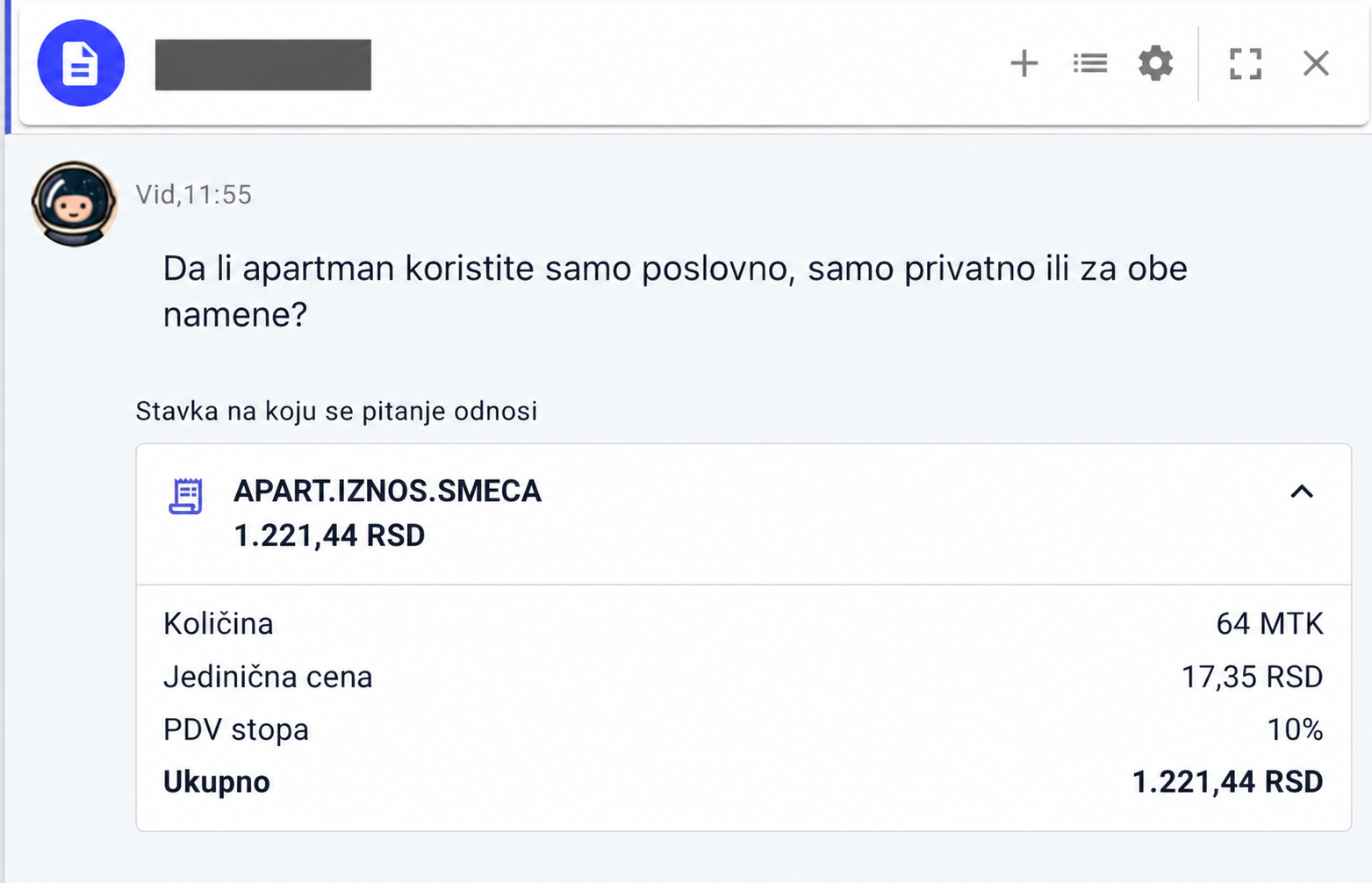
No ledger account codes. No section of a law for the client to decipher first. The question uses language you can use in a conversation with someone running a business.
The client replies:
All the apartments belong to the company, are recorded as investment properties and are used for letting.
That is a useful answer, but the conversation is not over. The AI goes on to clarify the type of letting: long-term residential rental, short-term tourist accommodation or letting business premises. In other words, it asks the client to explain what actually happens in those apartments.
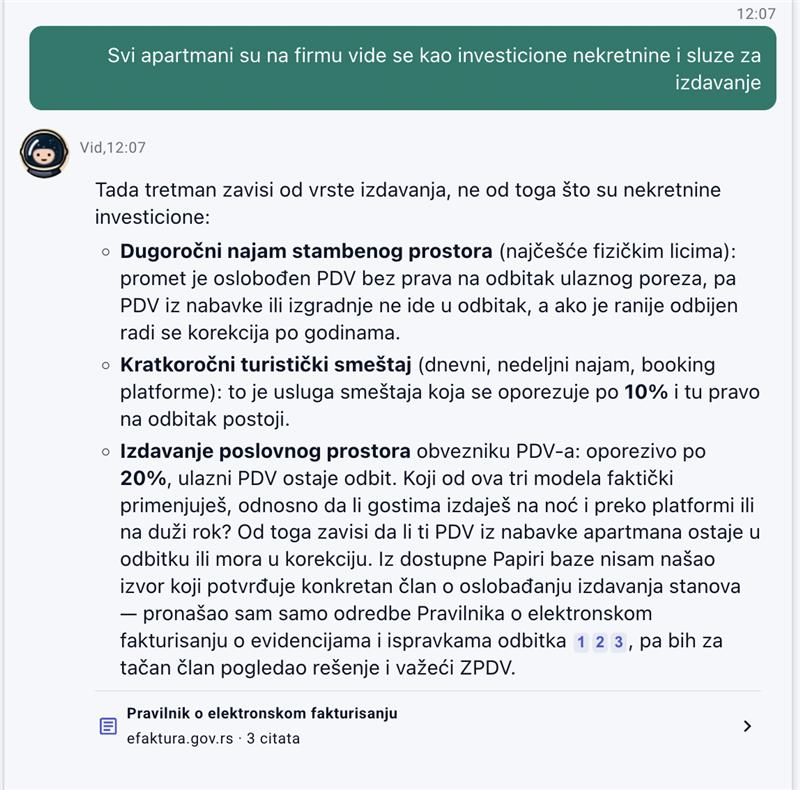
The screenshot also shows references the user can open, along with the original source and a PDF document.
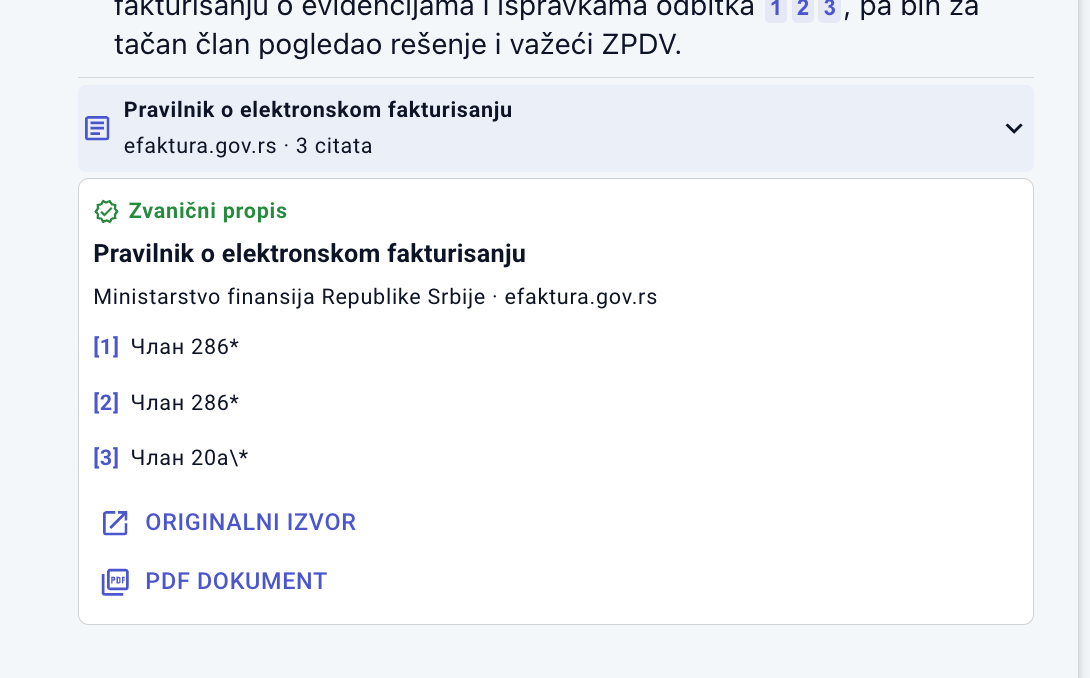
This also reveals a limitation of the current version: the AI says it did not find the exact provision confirming the exemption it discusses in the available material. The references it found concern records and adjustments to deductions. So this screenshot is not evidence of a complete tax explanation. That is precisely why better source coverage and answer checking are needed.
What I want to show is the workflow. The conversation continues until the information needed to determine the item’s VAT treatment has been gathered. The client supplies facts they know; they are not being asked to select the relevant tax provision themselves.
Second example: “Is this an expense?”
The client sends a restaurant receipt and asks:
Is this an expense?
The AI first asks whether the dinner was private or business-related. The client replies: “Business.” Then comes: “With employees or a business partner?” The answer is: “With a business partner.”
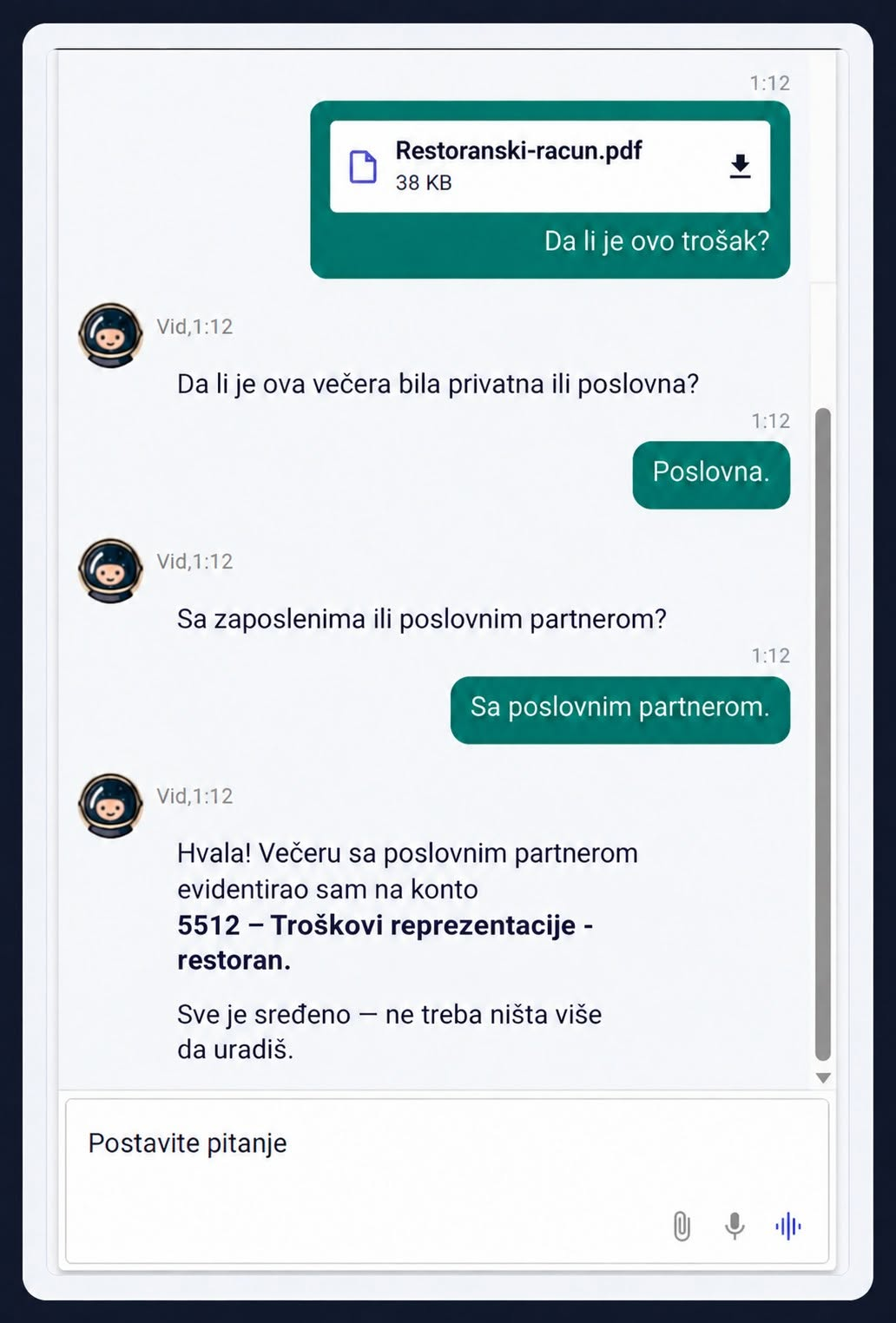
The client did not need to know what account 5512 was. They knew whom they had dinner with and why. That information did not necessarily appear on the receipt itself, yet it matters for processing it.
The same small task would otherwise have waited for the bookkeeper: open the receipt, notice the missing context, ask the client and wait for a reply. Here the clarification happens through a conversation with the AI. This example shows expense classification, while the previous conversation is part of preparing the VAT treatment. What they share is gathering the missing information.
Where does that leave the bookkeeper?
Depending on the settings, the proposed treatment can be accepted automatically or wait for a bookkeeper to review and confirm it. The ability to automate does not mean every case should go through without review.
For this article, what matters is the change that happens even when the bookkeeper keeps the confirmation step: the client has already clarified the uncertainty, their answer is attached to the document, and part of the preparation is done. The bookkeeper has something to review instead of only just beginning the search for missing information.
Just as importantly, the AI turns the answers into a memory. When it encounters the same case again, the previous answer can help it skip a question that has already been resolved. There is little point in asking the owner every month what the same apartment is used for. Of course, a previous answer remains valid only while the circumstances it described remain unchanged; a change of use calls for a fresh check.
The client can therefore take an active part in preparing documents and calculations, using what they already know about their business. Accounting terminology does not have to be the price of admission to that conversation.
Before you say “never”
These are two examples of one application of AI in bookkeeping. There are many others, but a good starting point is to look at how many steps hide behind a simple “I need to ask the client”.
In my view, the change AI is bringing to bookkeeping is inevitable. We can debate its pace and extent, and every individual result should be checked. But I would not base my understanding of what is coming on a few initial questions in ChatGPT.
Set aside some time. Take an example whose answer you know and see what AI does, where it goes wrong, what it did not know and whether it can ask for the information it is missing. Check the source, try a different approach and follow how its capabilities change. You are investing that time in understanding the future of your own work.
You do not have to take my word for it that AI will change bookkeeping. But for the sake of your own work, it deserves more than a few questions and one bad answer before you conclude that nothing will come of it.
Comments
There are no published comments yet.
Leave a comment
Your name and comment will be public after approval. Your email address stays private.